
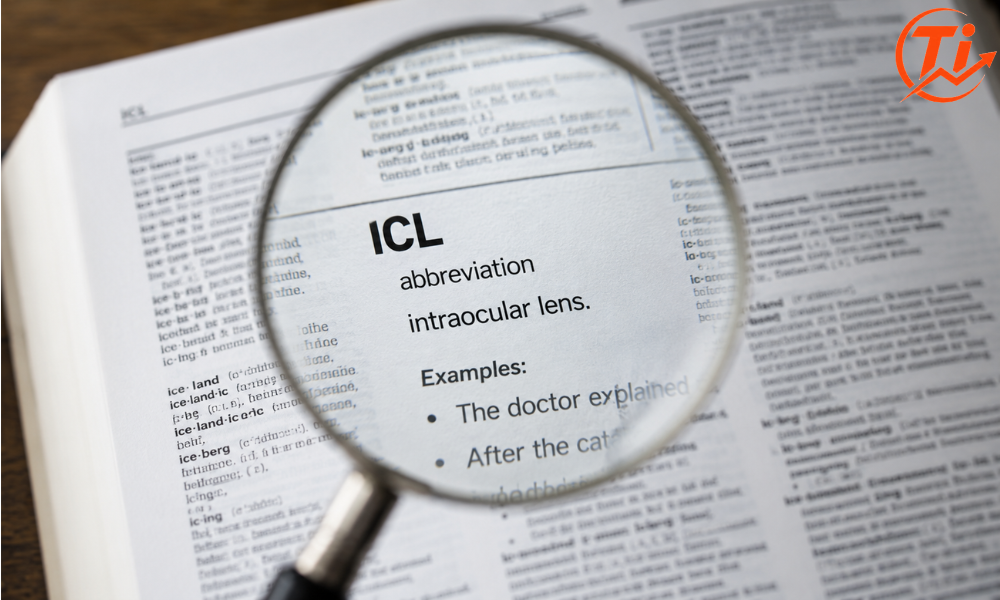
You’re scrolling through a group chat, a friend drops “icl, I actually cried during that movie,” and you’re left staring at three letters with zero context clues. You could ask what it means and risk looking out of the loop, or you could just nod along and hope it becomes clear from context. Neither is great.
ICL stands for “I Can’t Lie.” People use it right before sharing an honest opinion, a confession, or a reaction they want to underline as genuine. It works the same way “to be honest” or “not gonna lie” does, just shorter and a little more casual.
That’s the short version. The longer version involves a second, almost contradictory meaning, some rules about where the phrase fits in a sentence, and a handful of unrelated fields where the same three letters mean something completely different. All of that is covered below.
What Does ICL Mean in Texting?
In everyday texting and social media, ICL is shorthand for “I Can’t Lie.” It’s a small verbal flag that tells the person reading your message: what follows is genuine, not exaggerated, not sarcastic.
Think about how people naturally soften or emphasize statements in conversation. Someone might say “honestly” before admitting something slightly embarrassing, or “not gonna lie” before giving blunt feedback on your outfit. ICL slots into that same role. It’s a verbal nudge that says pay attention, this part is real.
A typical exchange looks like this:
- “icl that new burger place is overrated”
- “icl I’ve rewatched that show four times this month”
- “icl your presentation today was actually really good”
Notice the pattern. ICL almost always comes before the statement, not after it. It’s a preview, not a summary. That’s one of the small details that separates people who use the phrase naturally from people who are clearly just learning it.
Where the Phrase Came From
“I can’t lie” has existed as a spoken expression for a long time, well before texting shorthand turned it into three letters. People have always said some version of “I can’t lie, that surprised me” or “I can’t lie, I was nervous” as a way of adding weight to an honest statement.
The abbreviation itself grew out of the broader habit of compressing common phrases for faster typing, the same trend that gave us “tbh” for “to be honest” and “ngl” for “not gonna lie.” As messaging apps and social platforms made short-form text the default way people communicate, phrases that got used constantly in casual speech naturally got shortened. ICL followed that same path.
It shows up most often in casual, younger-skewing spaces: comment sections, texting between friends, captions, and reply threads on platforms built around quick, informal exchanges.
How to Use ICL in a Sentence
Using ICL correctly comes down to placement and tone. Here’s how it typically works in practice.
At the start of a sentence (most common):
- “icl this coffee shop makes the best cold brew in town”
- “icl I forgot we had plans tonight”
In the middle, for extra emphasis:
- “That movie, icl, was way better than I expected”
At the end, as a closing confirmation:
- “Yeah I did eat the last slice, icl”
Capitalization is loose. You’ll see it written as ICL, Icl, or icl depending on the person and platform, and none of these are considered “more correct” than the others in casual writing. A comma usually follows it when it opens a sentence, though plenty of people skip punctuation entirely in fast texting, which is normal for this kind of shorthand.
One more practical note: ICL is almost never spoken out loud as three separate letters. It exists primarily as a written shorthand. If someone did say it in conversation, they’d more likely just say the full phrase, “I can’t lie,” rather than spelling out the initials.
The “I Care Less” Confusion, Explained
Here’s where things get genuinely confusing, and where a lot of explanations online leave people more unsure than when they started.
A smaller number of people use ICL to mean “I Care Less,” which expresses indifference or detachment rather than honesty. That’s essentially the opposite emotional register from “I Can’t Lie.” One is about sincerity, the other is about not being bothered.
In practice, this second meaning is far less common, and context almost always resolves it. If ICL appears right before an opinion, confession, or reaction (“icl I actually liked that song”), it means “I Can’t Lie.” If it appears in response to someone else’s statement, especially something dismissive or unbothered in tone (“you can do whatever, icl”), it’s more likely functioning as “I Care Less.”
A simple test: read the sentence and swap in “honestly” first. If it still makes sense, you’re almost certainly looking at “I Can’t Lie.” If “honestly” sounds off but “whatever, I don’t really care” fits better, you’re looking at the less common “I Care Less” usage. When in doubt, “I Can’t Lie” is the safer assumption, since it’s the meaning most people default to.
ICL vs Similar Slang: How It Compares
ICL isn’t the only shorthand people use to flag honesty in a message. Here’s how it stacks up against the ones you’ll see most often.
| Acronym | Full Meaning | Typical Tone |
| ICL | I Can’t Lie | Sincere, slightly confessional |
| NGL | Not Gonna Lie | Blunt, matter-of-fact |
| TBH | To Be Honest | Neutral, straightforward |
| FR | For Real | Emphatic agreement or emphasis |
| No Cap | No Lie / No Exaggeration | Assertive, used to shut down doubt |
They overlap in function but carry slightly different weight. TBH reads a bit more formal and measured, almost like something you’d type in a work Slack message without raising eyebrows. NGL tends to introduce something slightly critical or unflattering. ICL sits closer to a personal admission, often something a little vulnerable or unexpected. No Cap is more of an insistence, used when someone might not believe you otherwise.
Swapping them isn’t a big deal in casual conversation, but paying attention to the difference helps you read tone more accurately when someone uses one over another.
ICL on Snapchat, TikTok, and Other Platforms
The core meaning doesn’t change from platform to platform, but the way it’s used shifts slightly depending on where you see it.
On Snapchat, ICL usually opens a caption or a reply to a snap, often paired with a candid photo or an unfiltered reaction. It signals “this is really how I look or feel right now, no touch-ups.”
On TikTok, it shows up constantly in comment sections and in captions on videos where the creator is admitting something, whether that’s a hot take, a confession, or an unpopular opinion.
On Instagram, it tends to appear in captions and comments in a similar way, often introducing a genuine reaction to something posted.
In group chats and Discord servers, ICL functions more like a quick verbal tic, dropped into fast-moving conversation the same way someone might say “honestly” mid-sentence without much thought.
Is ICL Formal or Informal?
ICL is informal, full stop. It belongs in texting, DMs, comments, and casual conversation with people you already know. It doesn’t belong in professional emails, cover letters, formal essays, or any writing where you’d naturally avoid contractions and slang. If you’re unsure whether a setting is formal enough to avoid it, that uncertainty is usually your answer: skip it and use “honestly” or “to be honest” instead.
Other Meanings of ICL (It’s Not Always Slang)
Outside of texting, the same three letters show up in a few unrelated fields. If you’ve come across ICL in a context that clearly isn’t casual conversation, one of these is probably what’s meant.
Implantable Collamer Lens (medical). In eye care, ICL refers to a small lens surgically placed inside the eye to correct nearsightedness and astigmatism, often used for people who aren’t good candidates for LASIK. This is a completely separate topic from the slang term, and you’ll typically see it in medical articles, clinic websites, or conversations about vision correction surgery.
International Computers Limited (business/tech history). ICL was also the name of a British computer company with a long history in enterprise technology before it was absorbed into a larger corporation. You’ll mostly encounter this meaning in business history or older tech industry writing.
Gaming and esports communities. In some gaming contexts, ICL gets used as shorthand for specific in-game terms, team names, or league abbreviations that vary by game and community. The meaning here is entirely dependent on which game or platform you’re in.
Finance and insurance. In a handful of financial and insurance documents, ICL can stand for specific contract or loan terms, though this usage is niche and rarely comes up outside of industry-specific paperwork.
If you’re not sure which meaning applies, look at the surrounding text. A casual message between friends almost always means “I Can’t Lie.” A medical article, business document, or gaming forum post will almost never mean that.
Read More: https://trendinginsight.co.uk/whatutalkingboutwillis-gifts/
FAQs
What does ICL mean in a text message?
ICL means “I Can’t Lie.” It’s used before an honest statement, opinion, or admission to signal that what follows is genuine.
What does ICL mean on Snapchat?
The same as everywhere else: “I Can’t Lie.” On Snapchat it’s often paired with a candid caption or unfiltered photo.
Is ICL the same as NGL?
They’re closely related but not identical. Both introduce honest statements, but NGL (“Not Gonna Lie”) tends to lead into something slightly critical, while ICL often introduces something more personal or confessional.
Can ICL mean “I Care Less”?
Yes, occasionally, though it’s a much less common usage than “I Can’t Lie.” Context usually makes the intended meaning clear.
What does ICL stand for in medical terms?
In eye care, ICL stands for Implantable Collamer Lens, a type of lens surgically implanted to correct vision problems like nearsightedness and astigmatism. This is unrelated to the texting slang.
Is ICL formal or informal language?
Informal. It belongs in casual texting and social media, not in professional or academic writing.
Where did the term ICL come from?
It grew out of the spoken phrase “I can’t lie,” shortened for faster typing as part of the broader trend of abbreviating common expressions in texting and online chat.
What’s the difference between ICL and TBH?
TBH (“To Be Honest”) reads slightly more neutral and measured. ICL tends to carry a more personal, sometimes confessional tone, often introducing something the speaker wasn’t necessarily planning to admit.
Final Thoughts
ICL is a small piece of shorthand doing a fairly specific job: flagging honesty in a message before you get to the actual point. Once you know it stands for “I Can’t Lie” and can recognize the rarer “I Care Less” usage from context, you’ll never have to pause and puzzle over it again.
If you run into ICL somewhere unexpected, like a medical article or a business document, remember that context is everything. The same three letters carry very different meanings depending on where you find them. Next time it shows up in your messages, you’ll know exactly what’s coming.