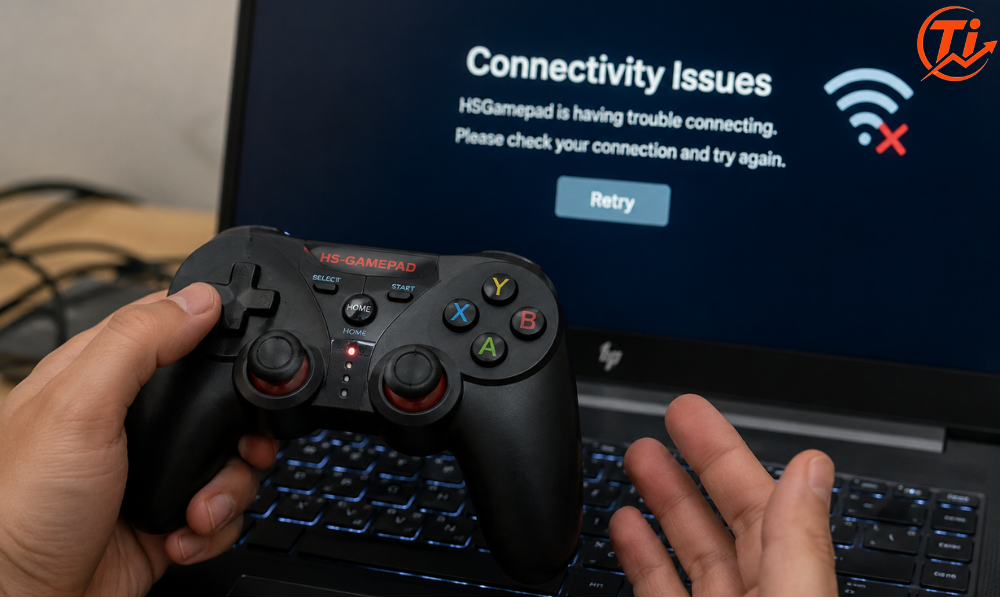
If your controller won’t pair, drops mid-match, or shows up in your device list but refuses to actually work, you’re dealing with connectivity issues hssgamepad users run into constantly. The frustrating part isn’t just the disconnects. It’s that HSSGamepad is sold and described so inconsistently across the internet that even figuring out what you’re troubleshooting can feel like the first problem. This guide fixes that, then walks through every fix that actually matters.
Most HSSGamepad connectivity issues come down to five things: a low or dead battery, the controller not being in the correct pairing mode, Bluetooth or wireless interference from nearby devices, an outdated or conflicting driver, or a mismatch between the input mode the controller is using (X-Input or D-Input) and what the game expects. Start by fully charging the controller, re-pairing it from scratch, and testing it on a different USB port or device before assuming anything is actually broken.
What HSSGamepad Actually Is (and Why That’s Part of the Problem)
Here’s something worth saying plainly before we get into fixes: HSSGamepad isn’t a single, clearly documented product with one manufacturer, one model number, and one official support page. Search around and you’ll find it described as a wireless controller, a Bluetooth gamepad, a multi-platform accessory, and even as software that pairs with other apps. That inconsistency isn’t your imagination, and it isn’t something most troubleshooting guides admit.
What this means practically is that generic “restart it and it’ll work” advice often falls flat, because your HSSGamepad might not be the same hardware as someone else’s. So the first real step isn’t charging or pairing. It’s identifying what you’re actually holding.
Check the following before doing anything else:
- Flip the controller over and look for a printed model number, serial number, or regulatory (FCC/CE) mark
- Check the exact name that shows up when you search for it in your device’s Bluetooth list. Manufacturers almost always bake a model identifier into that broadcast name
- Look at the port type. USB-C, Micro-USB, and proprietary charging ports usually point to different hardware generations
- Check the box or original listing (if you still have it) for a brand name that isn’t just “HSSGamepad”
Once you have even one of those details, you’re troubleshooting a real device instead of a label, and the rest of this guide becomes far more accurate for your situation.
Common Causes of HSSGamepad Connectivity Problems
Based on how these controllers typically behave, connectivity issues usually fall into a handful of categories. Matching your symptom to the right row below saves you from testing random fixes that don’t apply.
| Symptom | Likely Cause | Fix Section |
| Won’t show up when pairing | Not in pairing mode, or battery too low to broadcast | Pairing steps below |
| Pairs, then disconnects repeatedly | Wireless interference or weak battery | Interference section |
| Connects but doesn’t respond in-game | Input mode mismatch (X-Input vs D-Input) | In-game section |
| “USB Device Not Recognized” | Driver conflict or faulty cable/port | USB fix steps |
| Works wired, not wireless | Bluetooth module issue or dongle not seated properly | Wireless section |
| Buttons register late or inconsistently | Input lag from interference or background software | Interference section |
Charging and Power: The Step Everyone Skips
I know it sounds almost insulting to mention charging first, but a partially charged battery is genuinely one of the most common causes of pairing failures. Many wireless controllers need enough charge just to power the Bluetooth radio during the pairing handshake, even if the controller itself turns on and looks fine.
- Plug the controller in and charge it fully, ideally with the LED indicator confirming a full charge rather than guessing by time
- Disconnect the cable and power the controller off completely
- Wait about 10 seconds before powering it back on
- Attempt pairing again from a clean state
If this alone fixes the problem, the controller wasn’t broken. It just didn’t have enough power to complete the connection process reliably.
How to Put HSSGamepad Into Pairing Mode
Turning the controller on is not the same as putting it into pairing mode, and this mix-up causes a huge share of “it just won’t connect” complaints.
- Power the controller fully off first
- Hold the Bluetooth or pairing button (often combined with the Home or Power button) for 3 to 5 seconds
- Watch for a fast, rapid blinking LED. That’s the “searching for a device” signal. A slow blink usually means it’s already connected or waiting differently
- On your device, open Bluetooth settings, remove any old or duplicate HSSGamepad entries first, then search for new devices
- Select the controller as soon as it appears. Waiting too long can cause the pairing window to time out
If it still won’t appear, move the controller within about three feet of your device for the initial handshake. You can move farther away once the connection is established.
Fixing “USB Device Not Recognized” and Wired Connection Problems
A wired connection should be the most reliable option, but it fails in its own predictable ways.
- Try a different USB port. USB 3.0 (usually blue) ports occasionally cause recognition issues with older controller hardware, so testing a USB 2.0 port is worth ten seconds of your time
- Swap the cable. Charging-only cables are common culprits and won’t transmit data even though the controller powers on
- Open Device Manager on Windows and look for a yellow warning icon, usually under “Universal Serial Bus controllers” or “Other Devices”
- Right-click the flagged device, choose Uninstall, and check the box to delete the driver software if prompted
- Unplug the controller, wait 10 seconds, then plug it back in so Windows reinstalls the driver fresh
This process resolves driver conflicts in the vast majority of cases without needing any third-party software.
Wireless Interference: The Invisible Cause of Random Disconnects
If your HSSGamepad connects fine but drops randomly during play, interference is often the real culprit, not a hardware fault. Bluetooth and 2.4GHz wireless devices share crowded radio space, and busy environments make that worse.
Common interference sources include:
- Wi-Fi routers operating on overlapping channels, especially in apartments or offices with many networks nearby
- Other Bluetooth peripherals actively transmitting at the same time (headsets, mice, keyboards)
- USB hubs, especially unpowered ones, that struggle to deliver stable power to wireless dongles
- Physical obstructions like metal desks or monitor stands sitting directly between the controller and receiver
Try switching to a USB extension cable to move the wireless dongle away from the back of your PC, disable Bluetooth on devices you’re not actively using, and test in a different room if possible. If the disconnects stop, interference was the cause all along.
When It Connects But Doesn’t Respond In-Game
This is one of the more confusing scenarios because everything looks normal. Your device recognizes the controller, the LED shows a solid connection, but nothing happens when you press buttons in-game.
This usually comes down to input mode. Most modern games expect X-Input, the protocol Xbox controllers use natively. Older or generic controllers sometimes default to D-Input instead, which many newer titles don’t read correctly without extra configuration.
| X-Input | D-Input | |
| Common with | Xbox-style controllers | Older or generic USB controllers |
| Game support | Broadly supported in modern titles | Requires manual mapping in many games |
| Fix if misdetected | Use Steam Input to force X-Input emulation | Use third-party mapping software as a bridge |
If you’re on PC and using Steam, opening Steam’s controller settings and enabling generic gamepad support often resolves this instantly, since Steam can translate the signal into the format your game expects.
Platform-by-Platform Notes
Windows: Confirm Bluetooth version support. Bluetooth 4.0 or higher is generally required for stable wireless controller pairing, and older PCs with 3.0 hardware will struggle regardless of what you try on the controller side.
Android: Clear the Bluetooth cache in system settings if the controller repeatedly fails to reconnect after working previously. This is a known Android quirk with wireless accessories generally, not something specific to HSSGamepad.
iOS: Apple’s MFi (Made for iPhone) certification requirements mean some generic Bluetooth controllers pair inconsistently or only work in limited apps. If pairing succeeds but games don’t detect the controller, that’s often the reason.
Smart TVs: Bluetooth range and interference matter more here since TVs are often farther from the controller than a PC or phone would be. Keep the initial pairing distance short even if you plan to sit farther back afterward.
Consoles: Native support (rather than through cloud gaming apps) varies significantly by console and firmware version, so wired USB connection is generally the safer starting point if wireless pairing fails outright.
Battery Health for Wireless Models
If your HSSGamepad increasingly needs charging more often, or disconnects specifically as the battery drops below a certain point, that’s a sign of battery wear rather than a connection bug. Lithium batteries in small wireless accessories degrade with repeated full charge cycles over time, which is normal and expected rather than a defect.
A simple way to test this: fully charge the controller, then track roughly how long it lasts under normal use. If runtime keeps shrinking noticeably month over month, the battery is the actual issue, not Bluetooth or drivers.
When to Stop Troubleshooting
Most connectivity issues resolve within the steps above. But it’s worth knowing when to stop chasing software fixes and accept a hardware problem. If the controller fails to hold a charge even after a full charging cycle, if it disconnects within seconds regardless of distance or interference, or if it isn’t recognized on multiple different devices after driver reinstalls, you’re likely looking at failing internal hardware rather than a fixable software conflict.
Read More: https://trendinginsight.co.uk/snapchat-bsf-planets/
FAQs
Why is my HSSGamepad not connecting?
The most common causes are a low battery, the controller not being in actual pairing mode, or an outdated driver. Fully charge it, put it into pairing mode correctly, and re-pair from scratch before assuming it’s faulty.
How do I put my HSSGamepad into pairing mode?
Power the controller off, then hold the Bluetooth or pairing button for 3 to 5 seconds until the LED blinks rapidly. That fast blink pattern indicates it’s actively searching for a connection.
Why does my HSSGamepad keep disconnecting during gameplay?
This is usually wireless interference from nearby Bluetooth devices or crowded Wi-Fi channels, or a weakening battery. Moving the receiver closer, reducing nearby wireless traffic, and testing battery life separately will narrow down the cause.
Why does my controller connect but not respond in-game?
This is typically an input mode mismatch between X-Input and D-Input. Enabling generic controller support through Steam Input, or using dedicated mapping software, usually resolves it.
Is HSSGamepad compatible with Xbox and PlayStation?
Compatibility varies by the specific model and connection type, and native console support is generally less consistent than PC, Android, or cloud gaming platform support. A wired USB connection is the most reliable starting point on console.
How do I fix “USB Device Not Recognized” for a game controller?
Try a different USB port and cable first, then check Device Manager for a flagged driver, uninstall it along with its driver software, unplug the controller, and reconnect it so Windows reinstalls the driver automatically.
Does HSSGamepad work with Steam?
Yes, generally. Steam’s built-in controller configuration can detect generic gamepads and translate their input signal, which resolves most in-game responsiveness issues even when a game doesn’t officially list HSSGamepad as supported.
How long does the HSSGamepad battery last?
This depends heavily on the specific model and usage intensity, and battery life naturally shortens over time as the internal battery wears down through repeated charge cycles. If runtime drops sharply and suddenly, that points to battery degradation rather than a connectivity issue.
Final Thoughts
Connectivity issues hssgamepad owners deal with almost always trace back to one of a small handful of causes: power, pairing state, interference, drivers, or an input mode mismatch. Working through these systematically, starting with identifying your exact device and ending with a full charge and clean re-pair, resolves the overwhelming majority of cases without needing to replace anything.
If you’ve worked through every step here and your controller still won’t hold a stable connection, it’s reasonable to treat that as a hardware issue rather than something to keep troubleshooting indefinitely. Try the wired connection as a temporary fallback while you look into repair or replacement options, and keep this guide bookmarked for the next time a wireless accessory decides to give you trouble.